Video/Time-based work
My video work documents actions and performances, capturing ephemeral, time-based projects that share a common thread of examining social actions and interactions. I approach creating videos like sculpting, removing what is extraneous to reveal only the subject itself. Many Hands Make Light Work foregrounds the presence and activism of human rights advocates from the Memory, Truth, Reparations, and Democracy Collectives, set against the backdrop of the now-abandoned DOPS building in Brazil. OBA EBA, Fiat Lux et Misericordia centers on the UFRJ/EBA (Federal University of Rio, Brazil) Ilha do Fundão modernist campus, guided visually by plaster and silicone casts of my hands, offering a glimpse into the beauty and precariousness of the Brazilian Modernist project and the public university as a symbol of a brighter future. Pauca Paucis and Vanitas explore social power dynamics, scarcity, excess, and the tensions inherent in learned social behaviors of hierarchy, dominance, and servitude.
2024 to present
Stills by Fabian Alvarez and filmed by Bento Marzo
Many Hands Make Light Work takes place in an early 20th-century neoclassical landmark long associated with human rights violations. Originally inaugurated as the Central Police Headquarters, the building served as a notorious site of political repression, including the incarceration of political prisoners and violence against people of the African diaspora. During the Brazilian Military Dictatorship (1964–1985), it operated as the Department of Political and Social Order. (DOPS), one of the regime’s most feared institutions.
The performance is a symbolic collective act: survivors of the dictatorship, including individuals who were imprisoned in that very building, and families affected by State violence passed 500 lbs. of rock salt hand-to-hand, depositing it at the front gate of the now-abandoned DOPS. This action marked the 60th anniversary of the AI-5 decree, the darkest moment of Brazil’s authoritarian period. The participatory gesture was organized in collaboration with human-rights advocates from the Memory, Truth, Justice, Reparations, and Democracy Collectives.
This project also emerged as I confronted my own history—being born in the United States to Brazilian parents living in self-exile during the dictatorship—and considered the rising shadows of authoritarianism in North America.

Photos by Fabian Alvares
A HUMAN BODY CONTAINS ABOUT 9oz OF SALT
500 lbs represents AROUND 800 BODIES
Salt is a polysemic material, carrying multiple meanings—seasoning, preservation, cursing, cleansing, and protection. The inspiration for this action stems from the historical Inconfidência Mineira, a revolt that led to the brutal execution of its leader, Tiradentes. After his hanging, his body was quartered and publicly displayed as a warning, his house demolished, and the land where it stood salted to ensure that nothing would grow there. Tiradentes was made into an example for daring to seek independence from Portuguese rule and envisioning a republic.
In this work, salt is reintroduced as a subversive symbol, reclaiming what was once used for erasure and punishment to instead assert remembrance and resistance. The action materializes a collective demand that the DOPS building - which housed a long history of human rights violations since its construction - never be repeated.
Participants engaged with the action on their terms, honoring lost loved ones or confronting the incomprehensible violence they endured within those very walls. The performance became a space for collective catharsis—some spoke the names of the disappeared, others observed in silence, some rejoiced in defiance, while others loudly demanded that such horrors never happen again.
At its core, this action is about physical presence, turning the audience into active participants and performers. Through this shared experience, memory is embodied, and resistance is enacted—not as a passive reflection, but as an undeniable, collective force.
OBA EBA FIAT LUX ET MISERICORDIA
2024-present
Filmed by Bento Marzo
It was an honor to return to the Sculpture Department at the School of Fine Arts at the Federal University of Rio (EBA UFRJ) where I received my BFA in 2004. At the Sculpture Studio, I created silicone and plaster casts that embody the importance of this place in my formation and to generations of Brazilian artists.
The video shot by cinematographer Bento Marzo is a love letter to the public university UFRJ and the iconic modernist architecture of the Ilha do Fundão Campus. The casts created in the Sculpture Studio are the narrative element guiding the viewer through hallways, classrooms, offices, the surrounding landscapes, and larger-than-life modernist architecture.
The Federal University remains vibrant and more active than ever, offering free high-quality education. Despite all the challenges to continuing operational, it flaunts a robust and diverse student body, where people from myriad backgrounds and geographic regions of Rio and the country converge to study, teach, and make art.


vanitas
2024

Filmed by Pete Salomone
This video can only be viewed in exhibitions or special showings
Influenced by Luis Buñuel's extravagant and unsettling "The Exterminating Angel" and Brazilian Cinema Novo, this performance for the camera is a social experiment. In its second iteration, the performers embrace hedonism in the face of the transience of life and the futility of wealth accumulation. The tension between servants and masters escalates as the feast progresses.

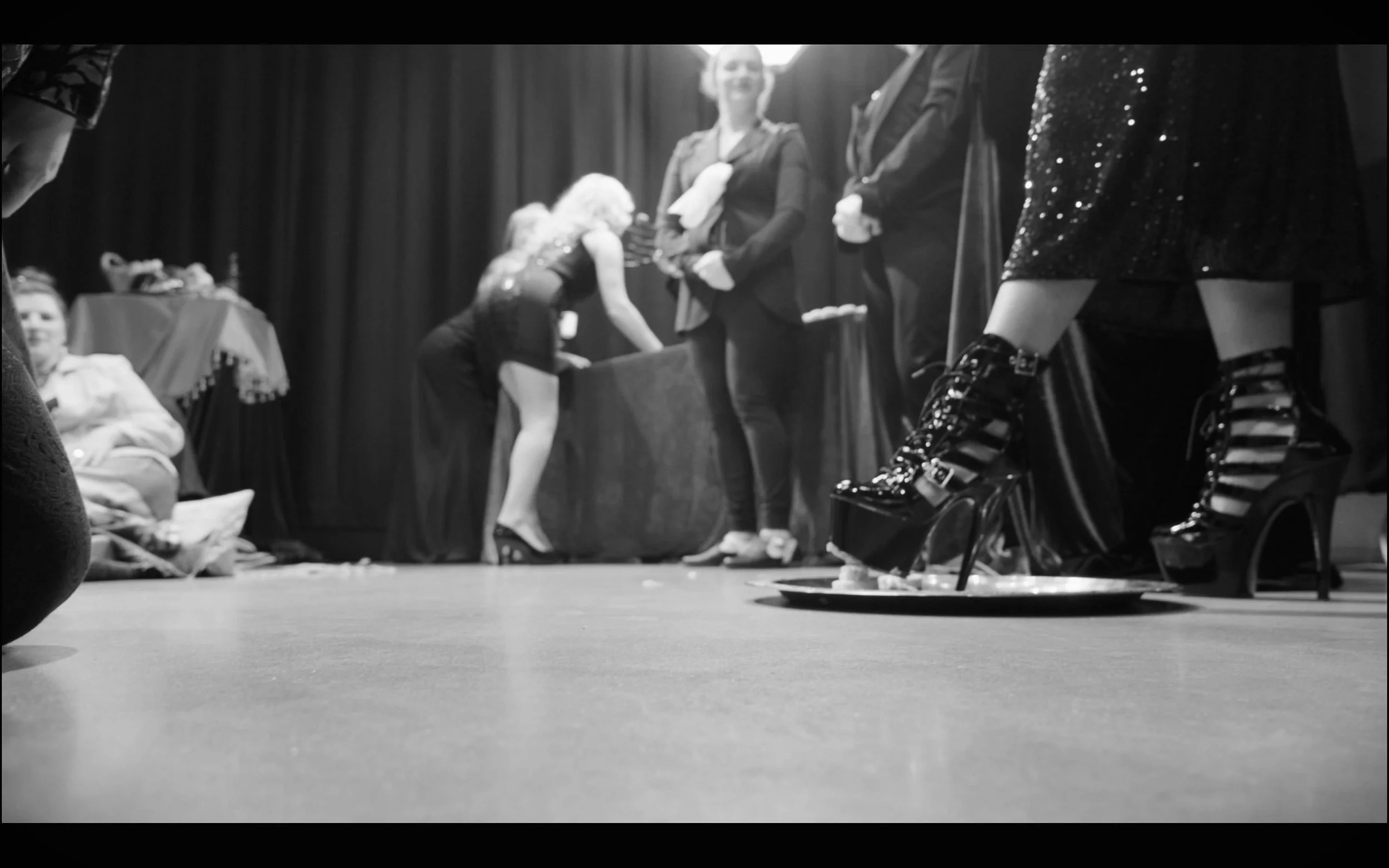


Pauca Paucis Performance for the camera
2022
Filmed by Aaron John Bourke

This video can only be viewed in exhibitions or special showings
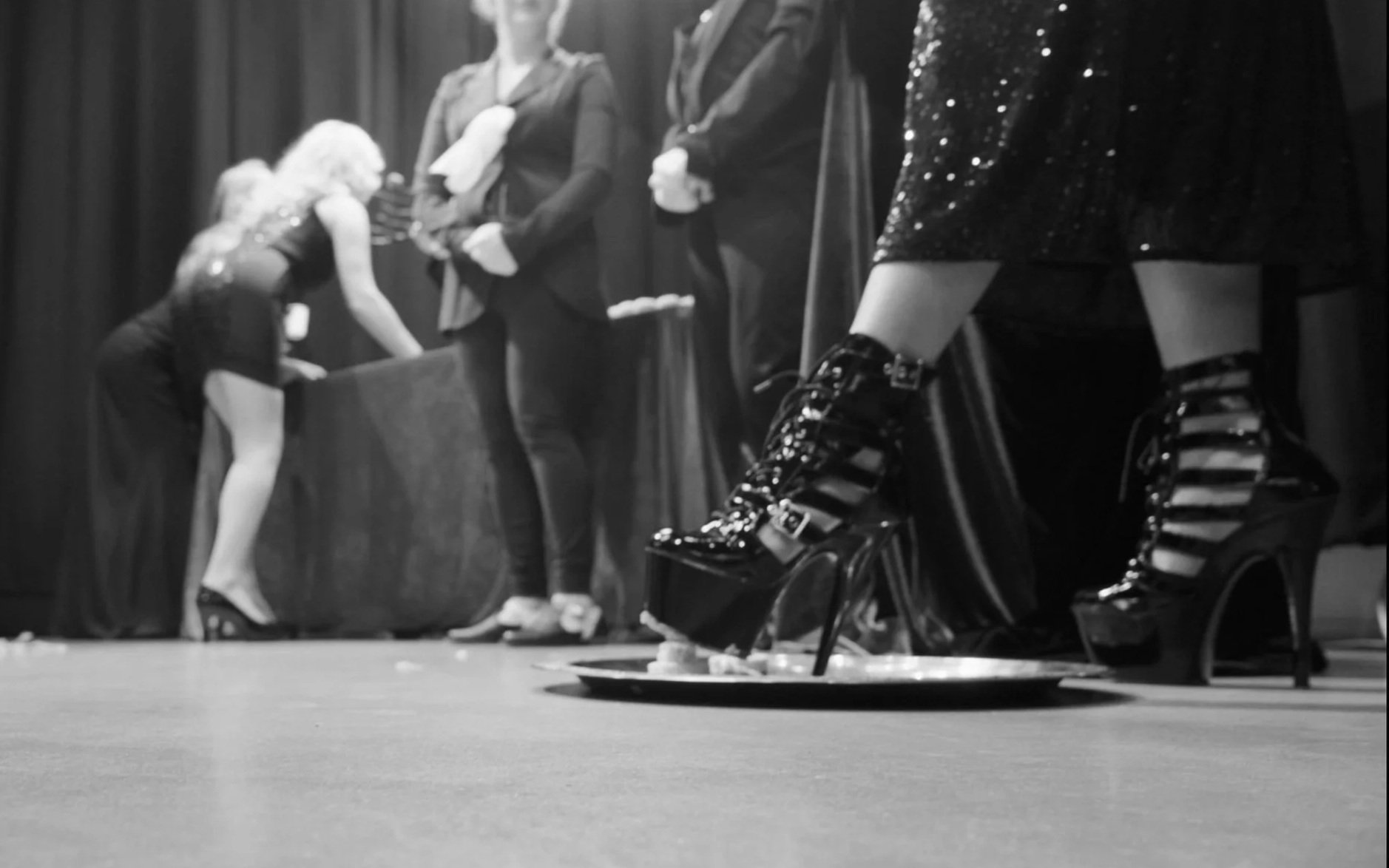
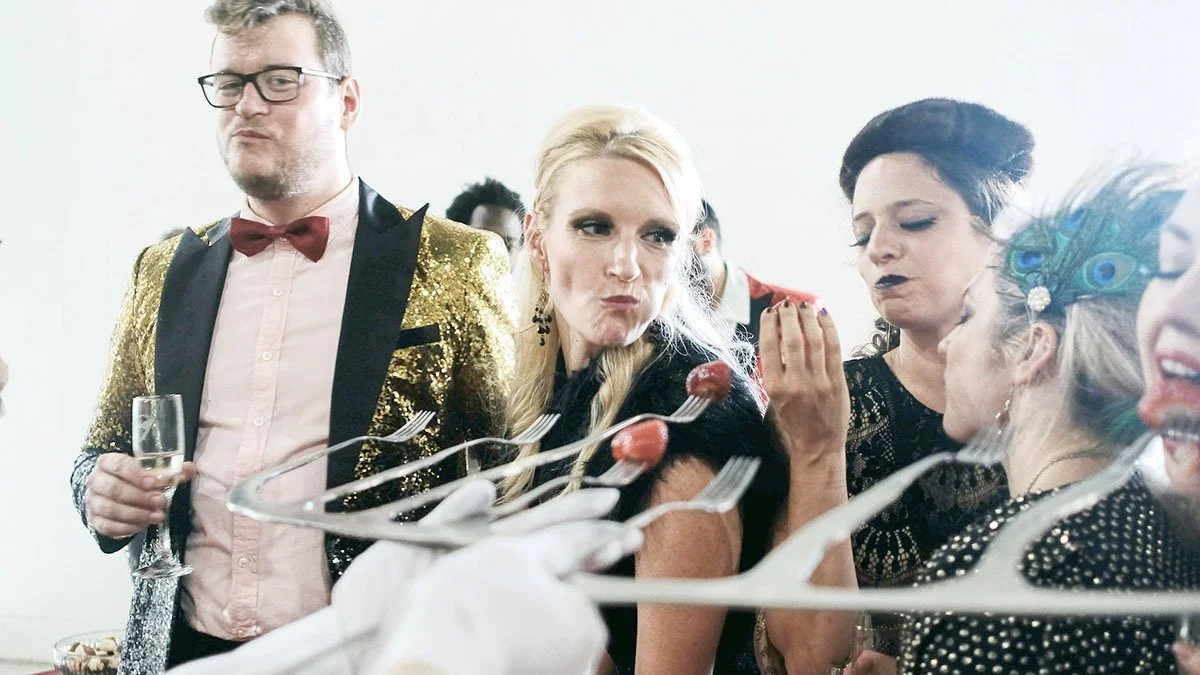
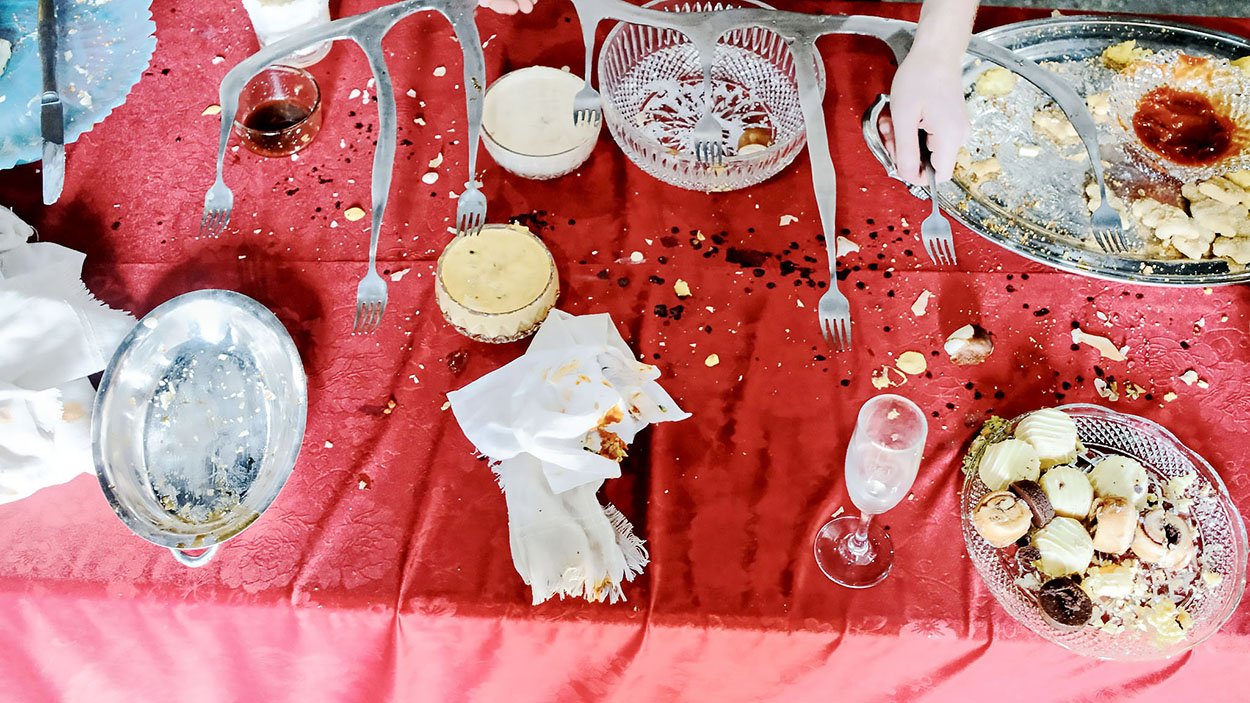
Pauca Paucis, meaning a few for the few in Latin, is a social experiment inspired by the conflict between scarcity and excess in our global society. Twenty participants were fed for four consecutive hours using the Pauca Paucis collective stainless steel utensil sculptures. This video was lovingly co-directed with Matthew Barrieau.
Filmed at Factory on Willow, NH.



Sugar words furthur
2022
Cast sugar, food coloring, and vodka, created at the Sculpture Space residency
Anomia
2021
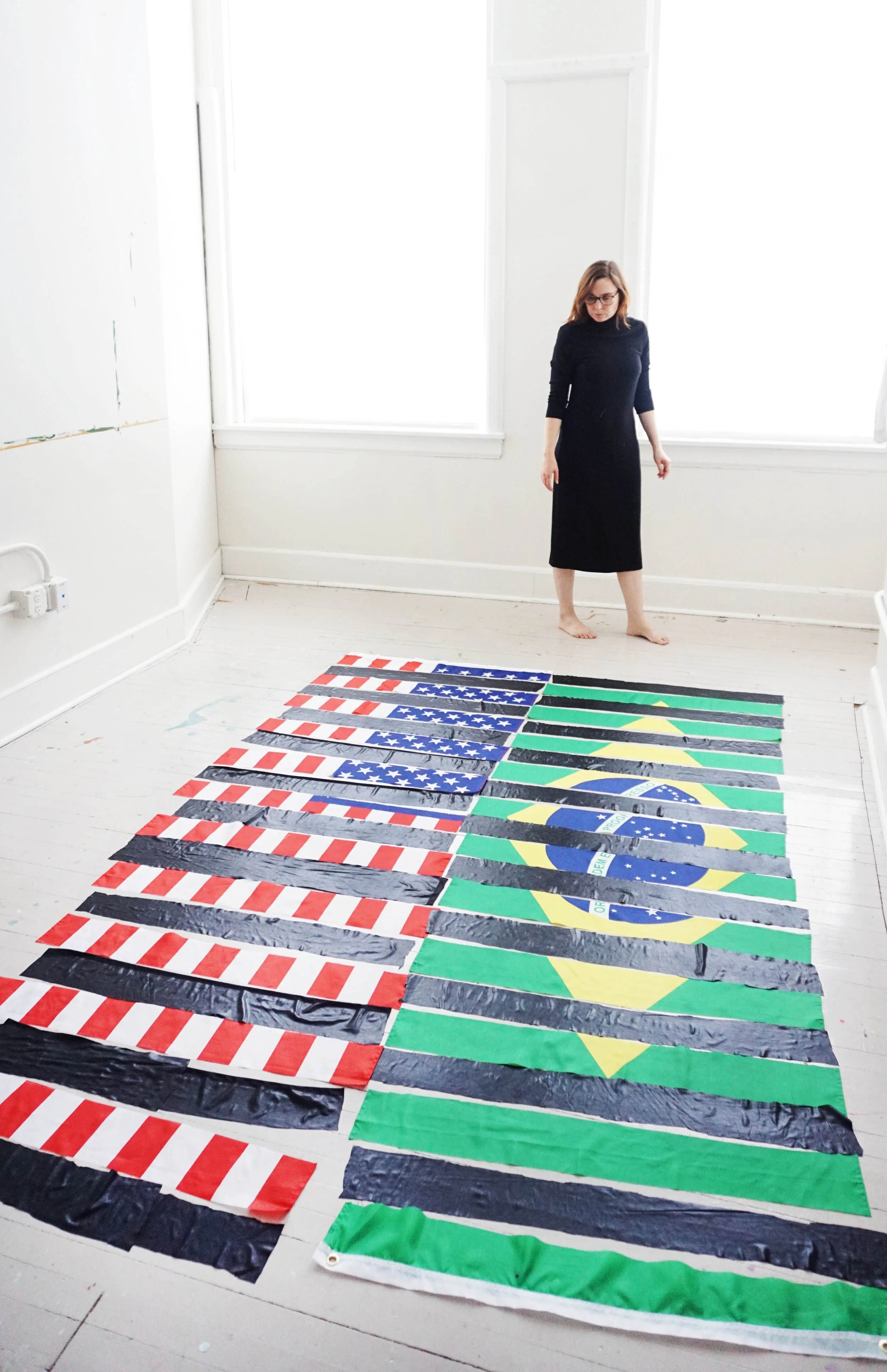
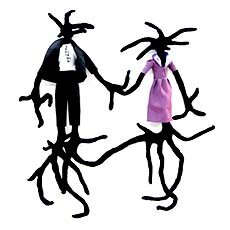
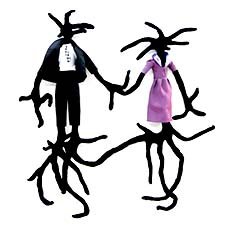
Anomia is a medical condition in which sufferers are unable to name objects or to recognize written or spoken names of objects. It can be caused by severe trauma.
Since moving to America Csekö has experienced a double feed of information from her two homes in Brazil and North America. Frequent communication with family and friends living in Brazil offers a vivid portrayal of the current political scenario overseas, while she has experienced the United States political landscape first-hand for the past 10 years.
Cseko witnessed both countries spiral into an overwhelming narrative of misinformation, and gross mismanagement, that cost an insurmountable amount of lives, as a pandemic worsened the already dire situation of pervasive corruption, as well as deep-set social and racial inequalities.
A sense of helplessness and loss of words ensued. As both countries failed to care for their populations denying basic human dignity and rights to their people.
The national symbol held within the flag became detached from its meaning. What does it mean to be a nation? What does it mean to be a citizen? What does it mean to participate in the quotidian political life of a country? What is justice and whom does it serve? Do we feel safe?
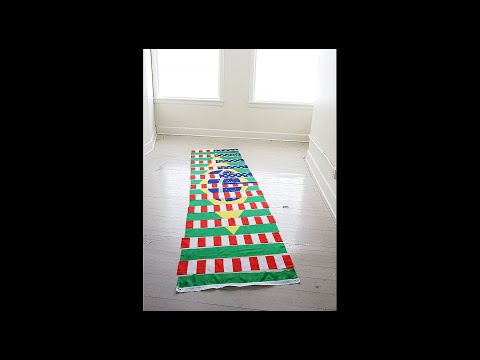
In early 2021 Csekö immersed herself in the process of deconstructing the Brazilian and North American national symbols, in hopes that by reconstructing them, new meanings would emerge.